
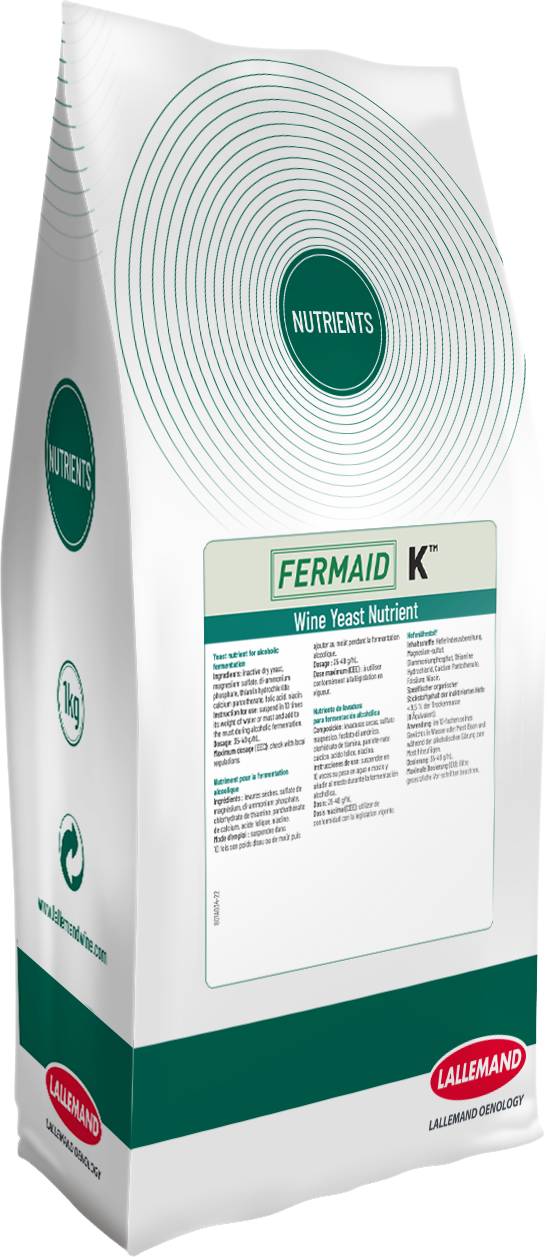
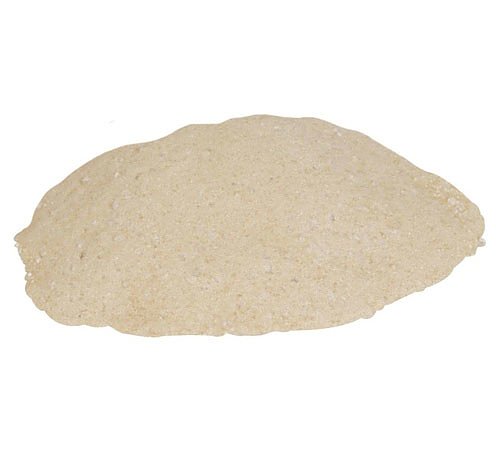
Fermaid K yeast nutrient 2.5 kg
Yeast nutrient with DAP
Description
Article no.: 645585
Fermaid K is a blended yeast nutrient adapted to the fermentation of grape musts, juice from concentrate, fruit musts, corn syrup and honey. Proper use of Fermaid reduces the risk of sluggish or stuck fermentations.
In fermentations, yeast growth must take place before the anaerobic (alcohol) fermentation can begin. In most wine applications, the common active dried yeast inoculation (when yeast is poured into the must) rate is 5 grams (0.2 ounces) per 20 liters (5 gallons) which results in an initial cell concentration of three to four million viable yeast cells per milliliter of must. Under normal conditions, the cell population will increase to 100 to 150 million viable yeast cells per milliliter before growth stops and alcohol fermentation takes over (stationary phase).
Because of this significant increase in biomass, adding Fermaid to the juice or must ensures that a proper balance of nutrients is available to the yeast during this critical growth phase. Without proper nutrition, the risk of sluggish or stuck fermentations increases. These sluggish fermentations are microbiologically unstable and can lead to the growth of undesirable organisms that can result in unwanted by-products, such as acetic acid, acetaldehyde and diacetyl.
The most common reasons for stuck or sluggish fermentations are:
NOTE: DO NOT combine the Fermaid K with the rehydrated yeast slurry before inoculation.
More product information
In fermentations, yeast growth must take place before the anaerobic (alcohol) fermentation can begin. In most wine applications, the common active dried yeast inoculation (when yeast is poured into the must) rate is 5 grams (0.2 ounces) per 20 liters (5 gallons) which results in an initial cell concentration of three to four million viable yeast cells per milliliter of must. Under normal conditions, the cell population will increase to 100 to 150 million viable yeast cells per milliliter before growth stops and alcohol fermentation takes over (stationary phase).
Because of this significant increase in biomass, adding Fermaid to the juice or must ensures that a proper balance of nutrients is available to the yeast during this critical growth phase. Without proper nutrition, the risk of sluggish or stuck fermentations increases. These sluggish fermentations are microbiologically unstable and can lead to the growth of undesirable organisms that can result in unwanted by-products, such as acetic acid, acetaldehyde and diacetyl.
The most common reasons for stuck or sluggish fermentations are:
- Improper rehydration, inoculation or fermentation temperature management
- Nutrient deficiencies
- Excessively clarified musts
- Yeast-inhibiting substances such as fungicides, fatty acids or high volatile acidity
- Usable nitrogen
- Thiamin, folic acid, niacin and calcium pantothenate
- Yeast hulls (lipids)
NOTE: DO NOT combine the Fermaid K with the rehydrated yeast slurry before inoculation.
More product information
- Fast delivery
- International shipping
- E-mail us, we reply swiftly!
- BrandLallemand
Description
Article no.: 645585
Fermaid K is a blended yeast nutrient adapted to the fermentation of grape musts, juice from concentrate, fruit musts, corn syrup and honey. Proper use of Fermaid reduces the risk of sluggish or stuck fermentations.
In fermentations, yeast growth must take place before the anaerobic (alcohol) fermentation can begin. In most wine applications, the common active dried yeast inoculation (when yeast is poured into the must) rate is 5 grams (0.2 ounces) per 20 liters (5 gallons) which results in an initial cell concentration of three to four million viable yeast cells per milliliter of must. Under normal conditions, the cell population will increase to 100 to 150 million viable yeast cells per milliliter before growth stops and alcohol fermentation takes over (stationary phase).
Because of this significant increase in biomass, adding Fermaid to the juice or must ensures that a proper balance of nutrients is available to the yeast during this critical growth phase. Without proper nutrition, the risk of sluggish or stuck fermentations increases. These sluggish fermentations are microbiologically unstable and can lead to the growth of undesirable organisms that can result in unwanted by-products, such as acetic acid, acetaldehyde and diacetyl.
The most common reasons for stuck or sluggish fermentations are:
NOTE: DO NOT combine the Fermaid K with the rehydrated yeast slurry before inoculation.
More product information
In fermentations, yeast growth must take place before the anaerobic (alcohol) fermentation can begin. In most wine applications, the common active dried yeast inoculation (when yeast is poured into the must) rate is 5 grams (0.2 ounces) per 20 liters (5 gallons) which results in an initial cell concentration of three to four million viable yeast cells per milliliter of must. Under normal conditions, the cell population will increase to 100 to 150 million viable yeast cells per milliliter before growth stops and alcohol fermentation takes over (stationary phase).
Because of this significant increase in biomass, adding Fermaid to the juice or must ensures that a proper balance of nutrients is available to the yeast during this critical growth phase. Without proper nutrition, the risk of sluggish or stuck fermentations increases. These sluggish fermentations are microbiologically unstable and can lead to the growth of undesirable organisms that can result in unwanted by-products, such as acetic acid, acetaldehyde and diacetyl.
The most common reasons for stuck or sluggish fermentations are:
- Improper rehydration, inoculation or fermentation temperature management
- Nutrient deficiencies
- Excessively clarified musts
- Yeast-inhibiting substances such as fungicides, fatty acids or high volatile acidity
- Usable nitrogen
- Thiamin, folic acid, niacin and calcium pantothenate
- Yeast hulls (lipids)
NOTE: DO NOT combine the Fermaid K with the rehydrated yeast slurry before inoculation.
More product information
Frågor och svar
Ställ en fråga
Frågor och svar